The Union Jack on other flags
Eighteen cards in the deck share the same top left corner. This is what the corner means, how the flags around it differ, and where else it survives — including places you would not expect.
What the corner is
The Union Jack — the Union Flag, in stricter usage; both names are accepted — combines three crosses: the red cross of St George for England, the white diagonal cross of St Andrew for Scotland, and the red diagonal cross of St Patrick for Ireland. The first two were joined in 1606 under James VI and I; St Patrick's saltire was added in 1801 when Ireland joined the union, and it is set off-centre on the white diagonals rather than laid over them. That offset gives the flag a right way up: in the quarter nearest the pole, the broad white band sits above the narrow red one.
Ensigns, and why so many flags share the corner
A British ensign is a flag with the Union Jack in the upper hoist quarter — the canton — and a plain field. In 1864 the Royal Navy settled the three colours: the White Ensign for warships, the Red Ensign for merchant ships, the Blue Ensign for government vessels. The Blue Ensign was then allowed to the ships of colonial governments with the colony's badge in the fly, and the flag of the colony's ships became, by habit and then by law, the flag of the colony. That is where every flag below comes from: a Blue Ensign, a badge, and in most cases no change at independence.
Australia and New Zealand
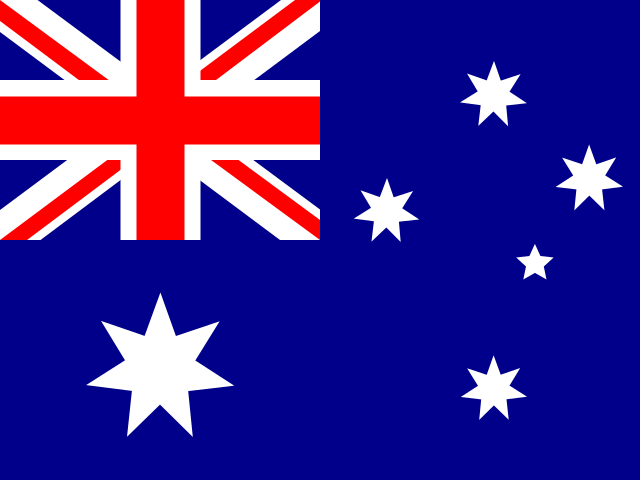
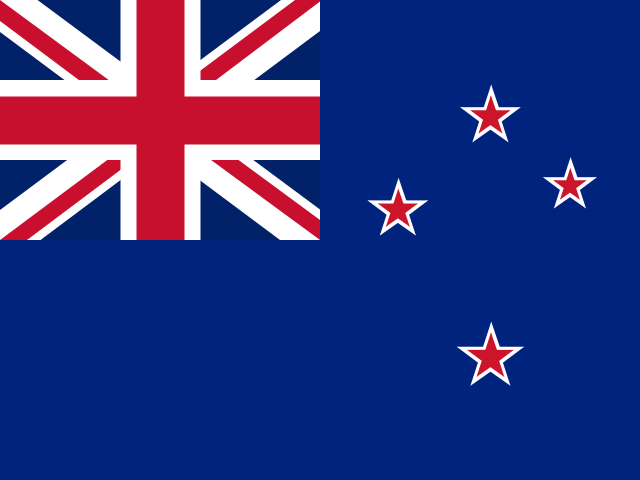
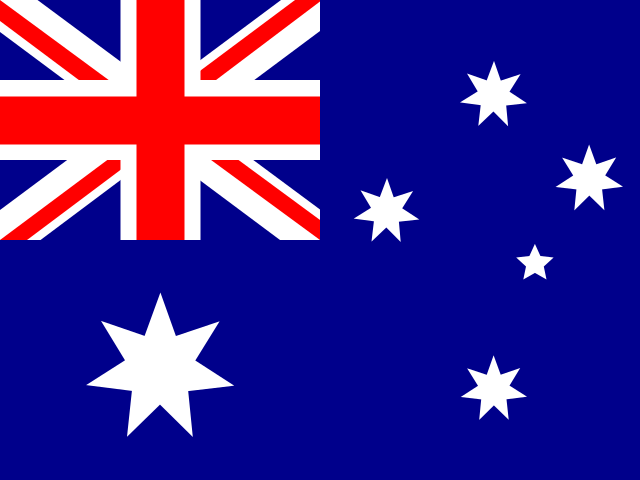
Both are Blue Ensigns with the Southern Cross in the fly, both 1:2. Australia's cross has five white stars — four with seven points and a smaller one with five — and a large seven-pointed Commonwealth Star beneath the Union Jack, one point for each of the six original states and one for the territories. New Zealand's has four red stars edged in white, five-pointed, and nothing beneath the canton. The Australian design won a public competition in 1901, the year of federation; New Zealand's was made official in 1902. New Zealand voted on replacing its flag in a two-stage referendum in 2015–16 and chose to keep it.
Fiji, the Cook Islands, Niue and Tuvalu
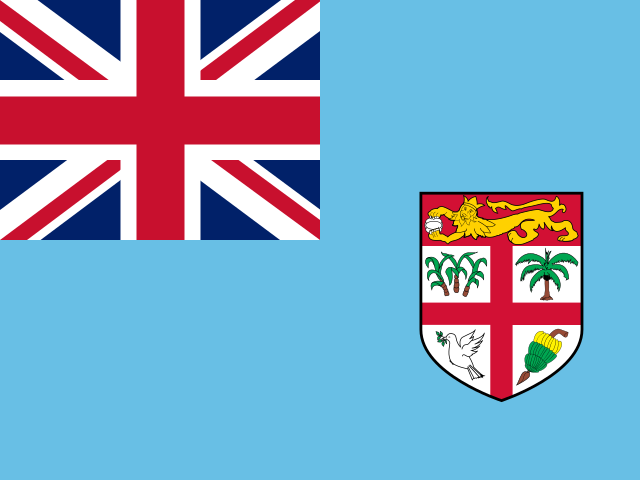
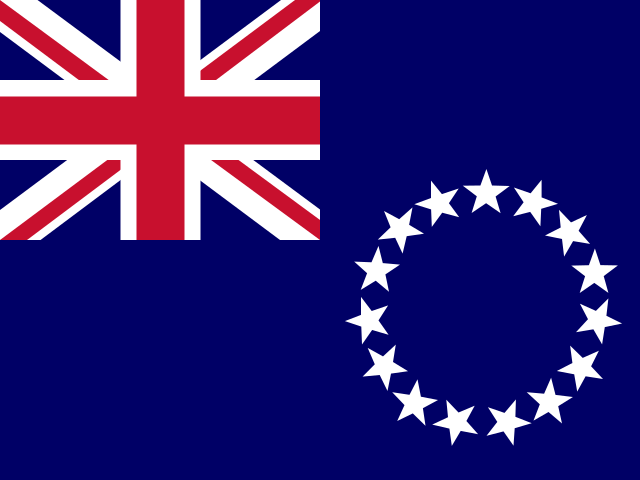
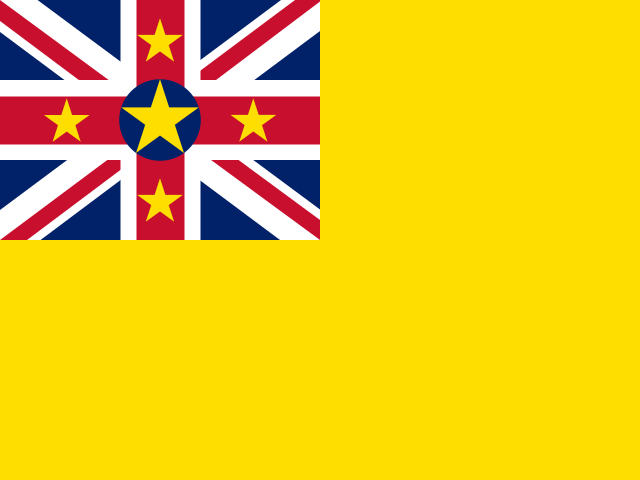
Fiji kept the ensign at independence in 1970 but lightened the field to sky blue and put the shield from its coat of arms in the fly: a gold lion across the top holding a cocoa pod, and below it the cross of St George dividing sugar cane, a coconut palm, a dove and bananas. The Cook Islands use a proper Blue Ensign with a ring of fifteen white stars, one for each island. Niue is the odd one out: a golden yellow field, and a Union Jack that itself carries stars — a large yellow one in a blue disc at the centre and four small ones on the arms of the cross. Tuvalu's flag has a light blue field with nine yellow stars laid out like the islands on a map; it removed the Union Jack in the mid-1990s and restored it in 1997. Tuvalu is not in the deck, though — the map data behind the globe has no outline for atolls that small.
The British territories in the deck
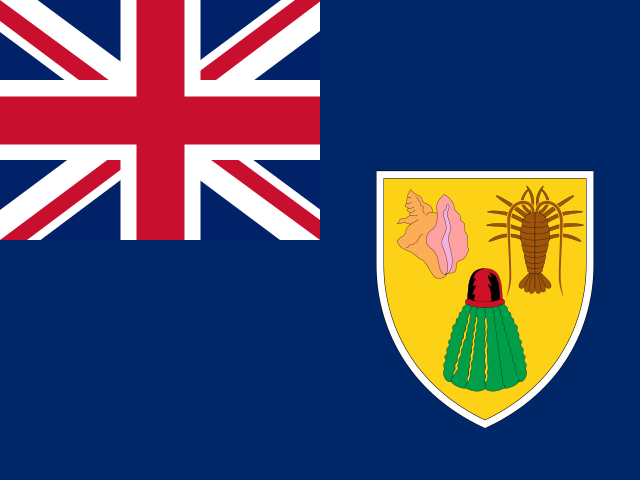
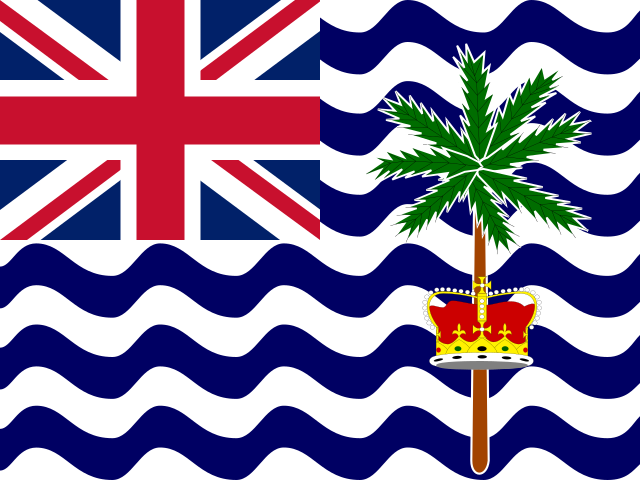
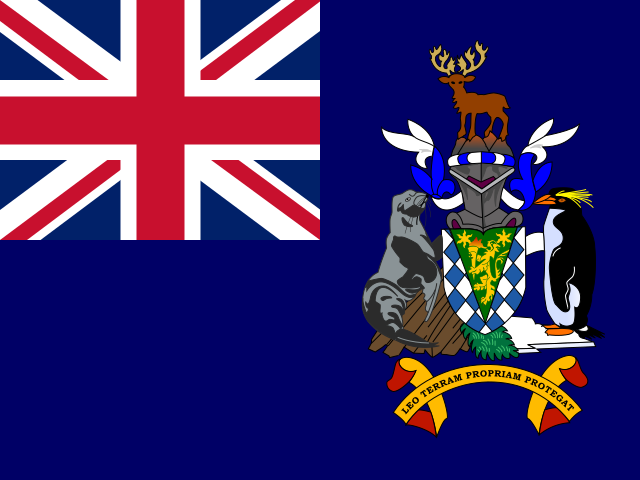
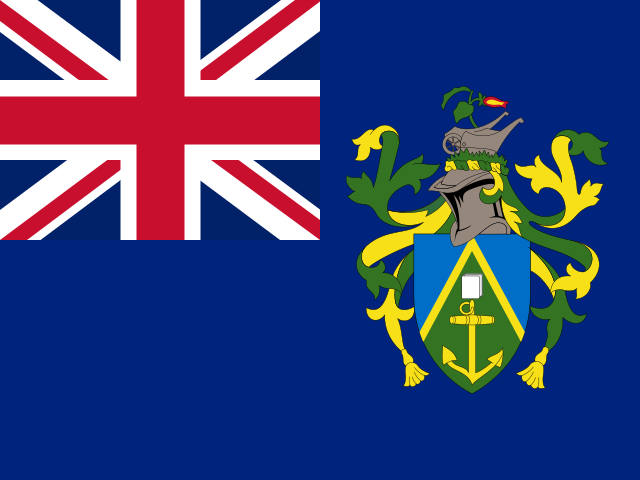
Eleven of the flags are British Overseas Territories, and eight of them are the classic pattern — a Blue Ensign with a shield or full arms in the fly — so the badge is the only thing to read:
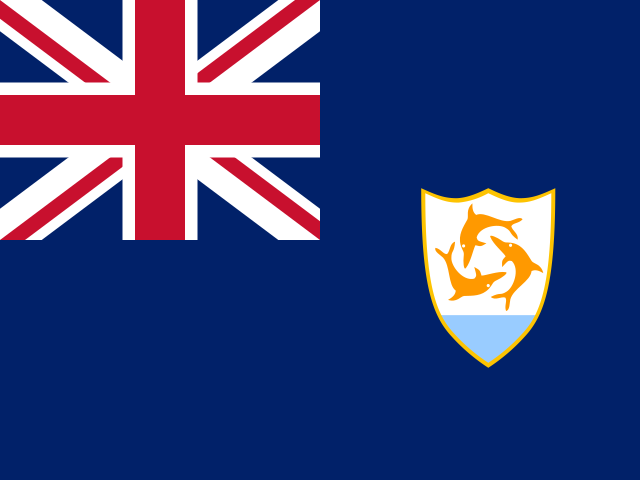
- Anguilla — three orange dolphins in a circle on white, over a band of turquoise sea.
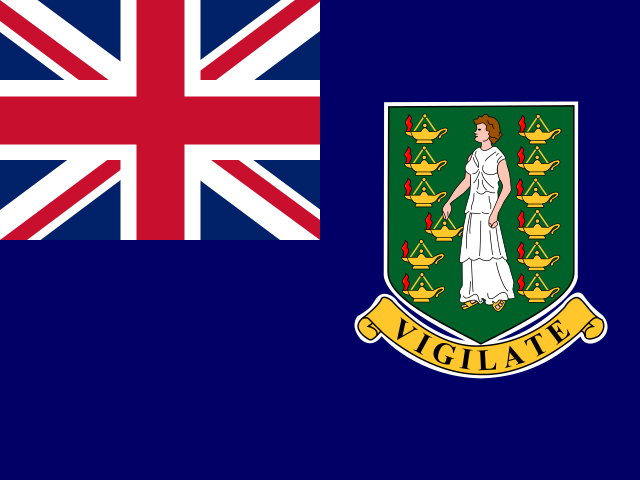
- British Virgin Islands — a green shield with a woman in white, St Ursula, among golden oil lamps.
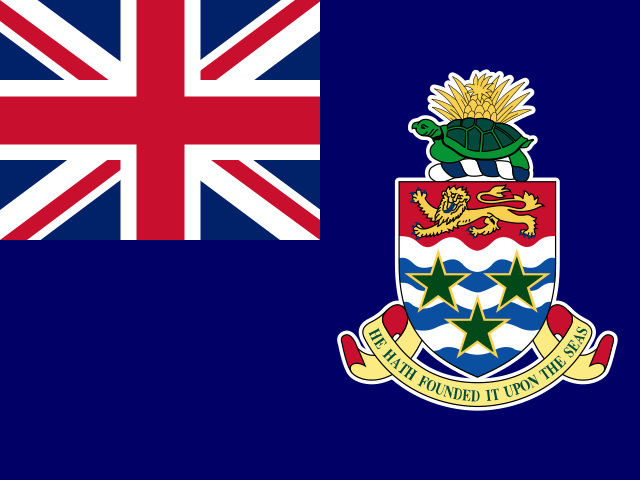
- Cayman Islands — a shield with three green stars on blue and white waves, and a turtle with a pineapple above it.
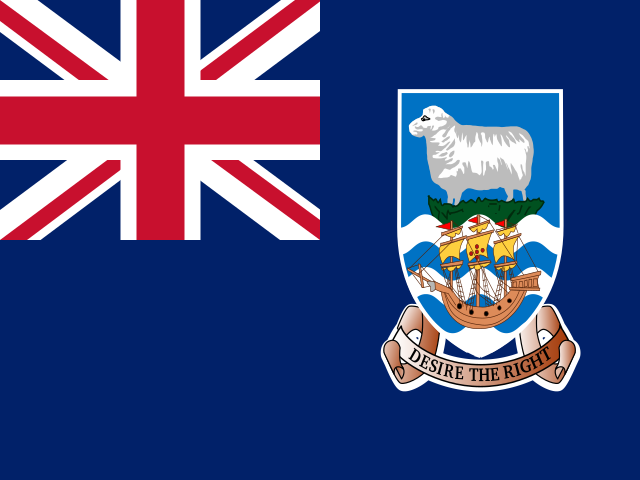
- Falkland Islands — a ram standing above a sailing ship.
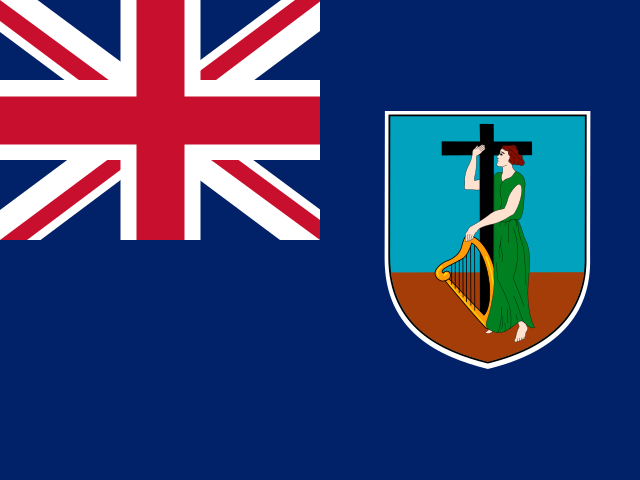
- Montserrat — a woman in green holding a golden harp and clasping a black cross.
- Pitcairn — an anchor and a Bible from the Bounty, with a wheelbarrow above the shield.
- South Georgia and the South Sandwich Islands — the full arms, with a fur seal and a macaroni penguin as supporters and a reindeer on top.
- Turks and Caicos — a yellow shield with a conch shell, a lobster and a cactus.
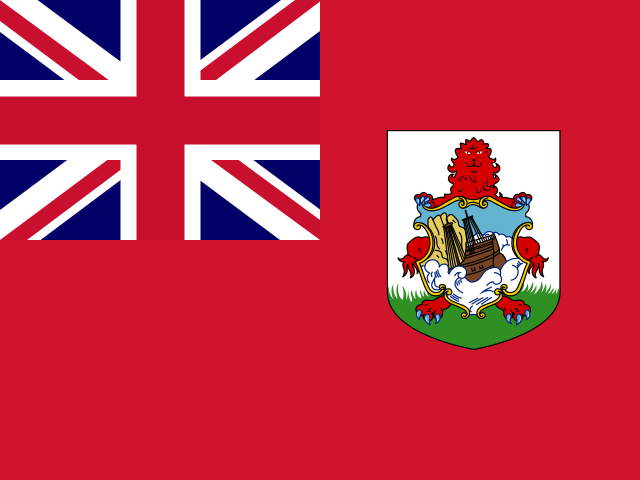
The other three break the pattern. Bermuda flies a Red Ensign, the merchant colour, with a red lion holding a shield that shows the wreck of the Sea Venture. The British Indian Ocean Territory has no plain field at all — blue and white wavy stripes run across the whole flag, with a palm tree and a crown in the fly. And the card for Saint Helena, Ascension and Tristan da Cunha shows the Union Jack on its own: each of the three islands has a Blue Ensign of its own, but the territory as a whole, which is what the code and the outline cover, has none. Gibraltar's flag has no Union Jack, and Gibraltar is not on the globe in any case.
Who gave it up
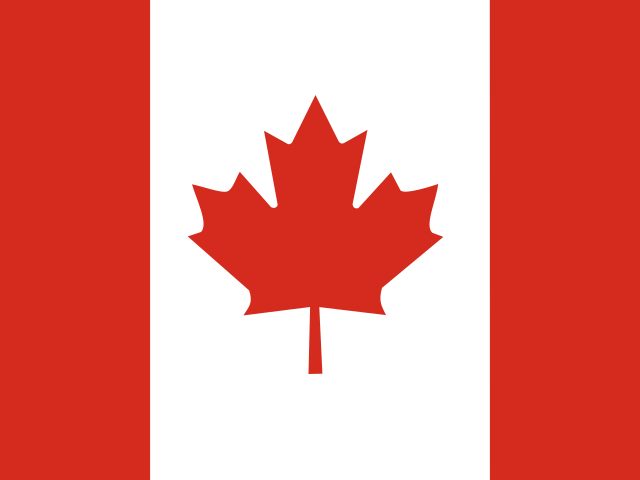
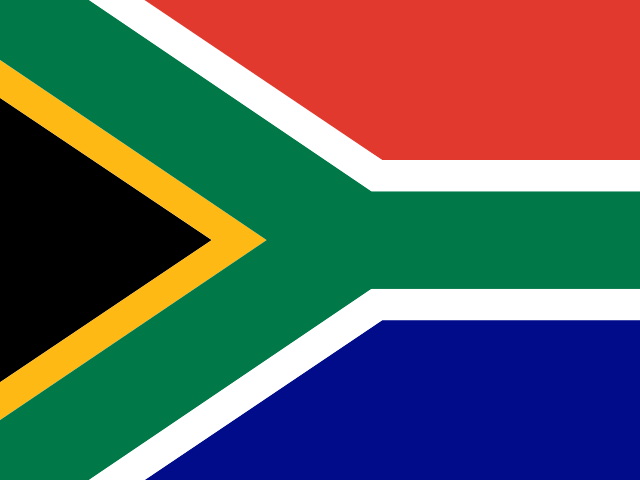
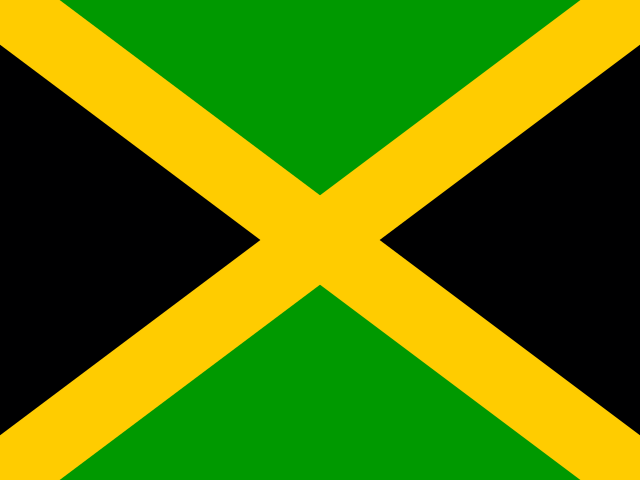
Canada flew the Red Ensign with its arms until 15 February 1965, when the red maple leaf replaced it after a long and bitter debate in Parliament. South Africa's flag of 1928 carried a small Union Jack at its centre, alongside the flags of the two Boer republics; it lasted until 1994. Most colonies replaced their Blue Ensigns on the day of independence — Jamaica, Nigeria, Kenya and dozens more — and Hong Kong's went in 1997. Among those that kept the corner, the question comes back now and then: New Zealand held its referendum, Tuvalu changed and changed back, and Fiji's government announced a replacement in 2015 and shelved it the following year.
Hawaii, and the provinces and states that keep it
The one flag of a US state with a Union Jack is Hawaii's: the canton, and eight horizontal stripes of white, red and blue for the eight main islands. Hawaii was never a British colony; the flag comes from the Hawaiian Kingdom of the early nineteenth century, which had close ties with Britain, and accounts of exactly how the design came about differ. It survived annexation and statehood unchanged, and it is on the US states map.
In Canada, Ontario and Manitoba adopted Red Ensigns with their provincial shields in the mid-1960s, just as the country itself gave the Red Ensign up: Ontario's shield has the cross of St George above three gold maple leaves, Manitoba's a bison on a rock. British Columbia's flag stretches the Union Jack across its whole upper half with a gold crown at the centre, over a setting sun and wavy blue and white bars. Newfoundland and Labrador's flag, adopted in 1980, contains no Union Jack, but its blue, white, red and gold geometry was designed to recall one. All of them are on the Canada map.
Australia's six states all fly Blue Ensigns with a badge, and the badges do the work on the Australia map: New South Wales has a white disc with a red cross of St George, a gold lion in the middle and a gold star on each arm; Victoria the Southern Cross under a crown, with no disc; Queensland a light blue Maltese cross with a crown at its centre on a white disc; South Australia a piping shrike — a white-backed magpie with its wings spread — on a gold disc; Western Australia a black swan on a gold disc; Tasmania a red lion on a white disc. The two territories do not follow the pattern: the Northern Territory and the Australian Capital Territory have flags of their own without the Union Jack.
Try it
The whole set comes up in All flags, with most of the territories among the last few cards; the state and provincial ensigns are on the Australia, Canada and USA maps. Related: Flags that look alike for Australia against New Zealand, and Flag symbols for the stars and crosses.