Flags with unusual shapes and proportions
Almost every flag is a rectangle, and most are a little wider than 3:2. The exceptions are few enough to list, and they say something about how a flag's shape gets decided.
Nepal: the only national flag that is not a rectangle
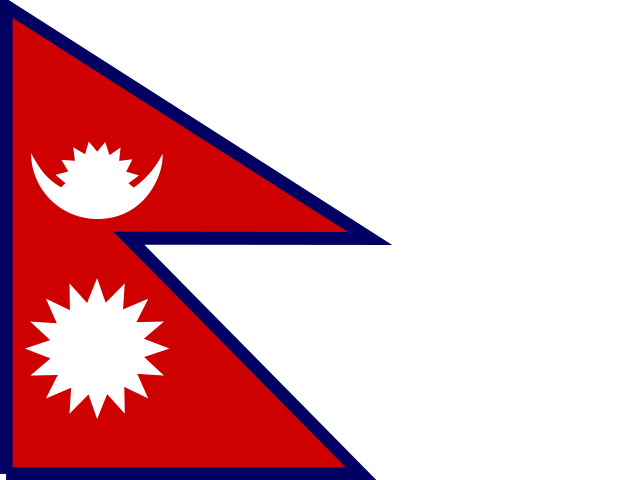
Nepal's flag is two stacked pennants, crimson with a dark blue border, the upper one bearing a white moon and the lower a white sun. It is the only non-rectangular national flag in the world, and slightly taller than it is wide. The present form was fixed by the constitution of 1962, whose schedule sets out the geometric construction step by step — the crimson field, the border, and the moon and sun drawn from arcs and lines — and it was that constitution which removed the faces the moon and sun had carried until then. The official reading is that the two express the hope that the nation will last as long as the sun and the moon; an older reading, that the moon stood for the royal house and the sun for the Rana prime ministers, belongs to the monarchy, which ended in 2008.
Square: Switzerland and the Vatican
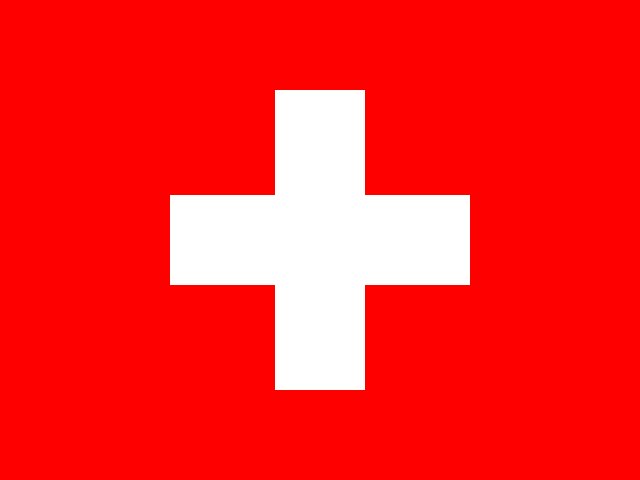
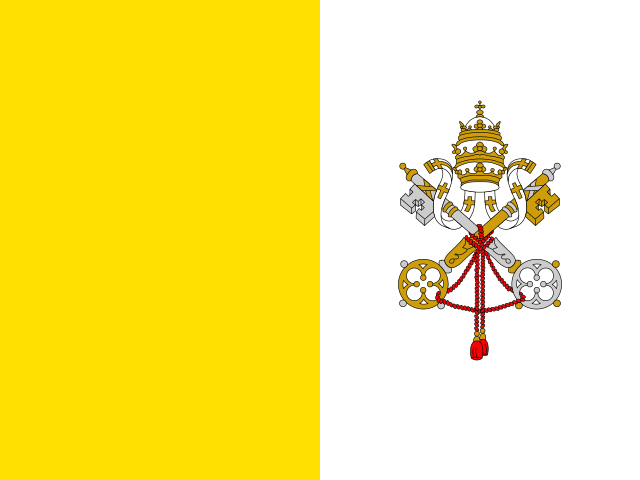
Switzerland's flag is a square — a white cross on red, the arms of the cross of equal length and each one-sixth longer than it is wide, a definition that dates from 1889. The flags of the twenty-six cantons are square too. The one Swiss flag that is not square is the civil ensign, flown by Swiss ships, which is 2:3. Vatican City's flag, yellow at the hoist and white at the fly with the crossed keys and the papal tiara on the white, is also a square; it was adopted in 1929 with the Lateran Treaty.
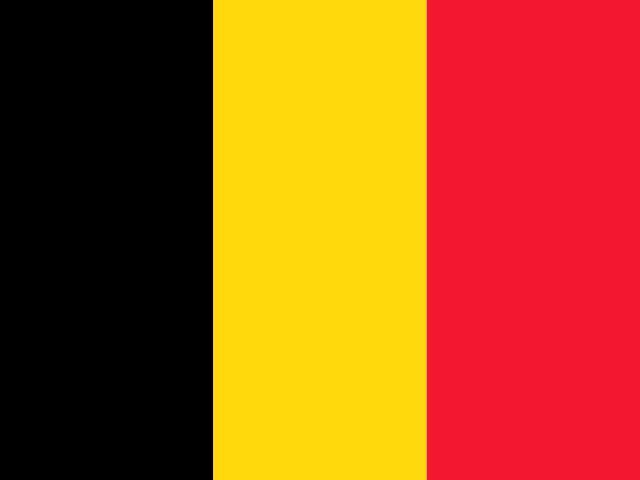
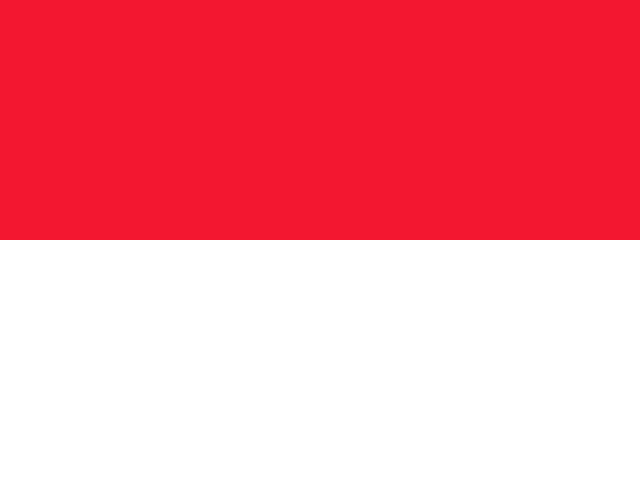
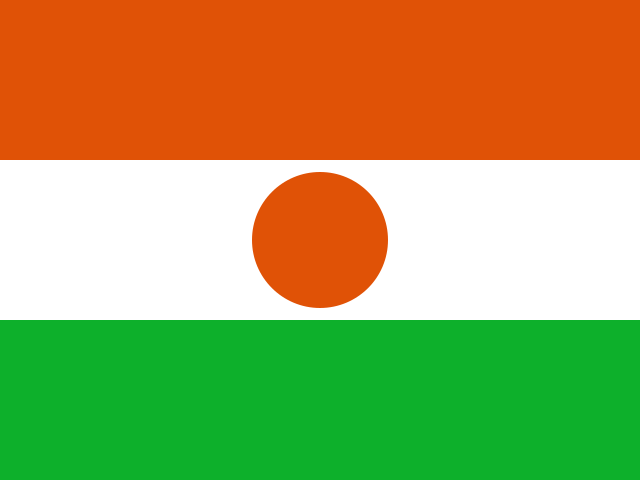
A few others come close to a square without getting there: Belgium's official proportion is 13:15, though it is nearly always flown at 2:3; Niger's is 6:7; Monaco's 4:5.
Qatar: the longest
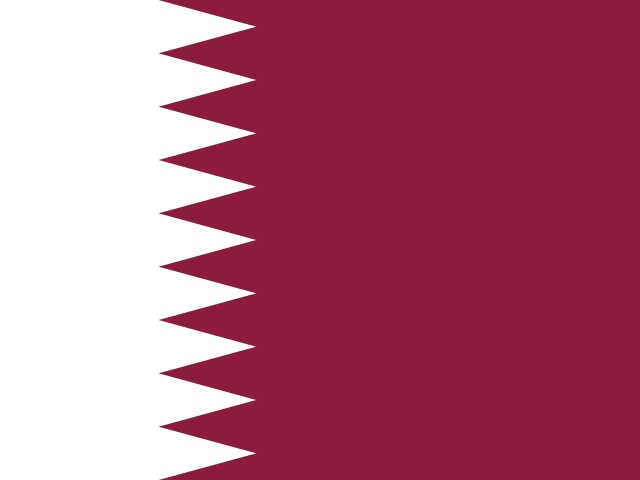
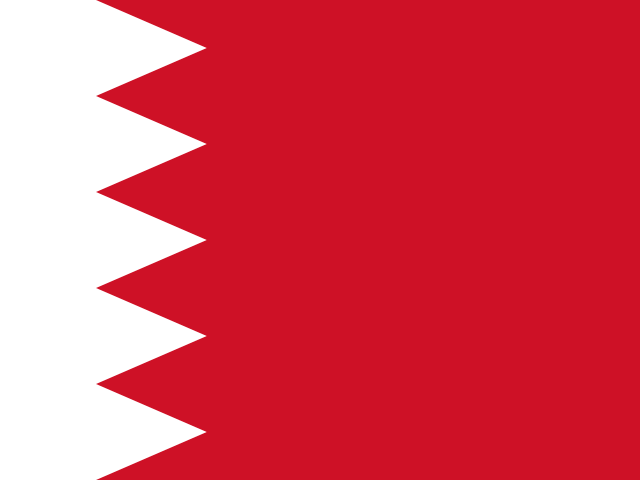
Qatar's flag is 11:28, more than two and a half times as wide as it is tall — the only national flag more than twice as wide as it is high. A white band at the hoist meets the maroon field along a serrated line of nine points. Bahrain's flag next door has the same construction at 3:5, in red, with five points; the two are compared in Flags that look alike. The story that Qatar's maroon began as a red that darkened in the sun is a tradition, not a documented fact.
The ordinary ratios, and who uses which
Three proportions cover most of the world, and they are worth knowing because they follow families and history rather than chance.
- 2:3 is the commonest: France, Italy, Spain, the Netherlands, Russia, China, Japan, Chile, Colombia, Austria, Côte d'Ivoire, and a large share of the rest.
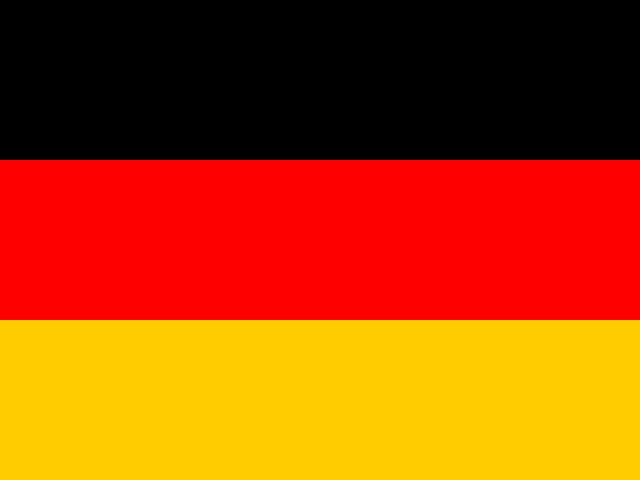
- 3:5 belongs to Germany, Luxembourg and Bahrain; 5:8 to Sweden and Poland.
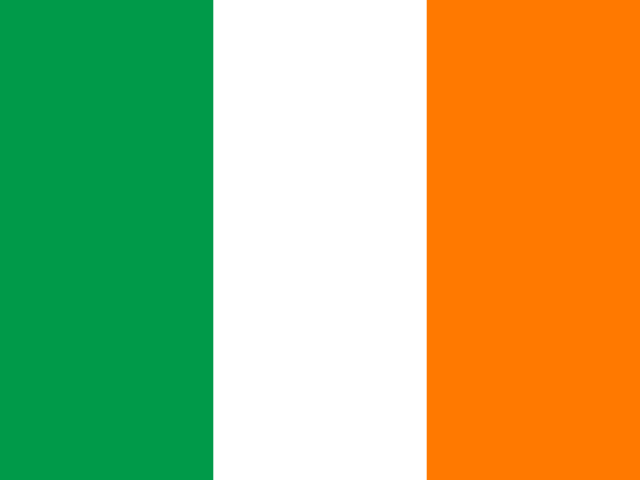
- 1:2 is the British ensign shape and travels with it — the United Kingdom, Australia, New Zealand, Fiji, the Cook Islands, Niue — and belongs also to Canada, Ireland and Tonga.
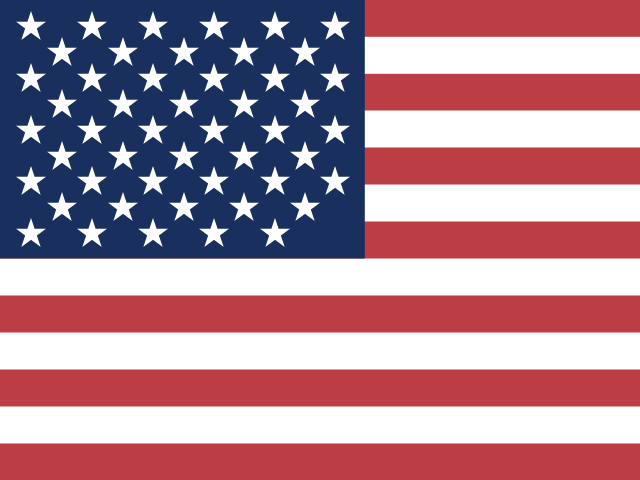
- 10:19 is the United States flag as the government specifies it, though the flags on sale are mostly 3:5.
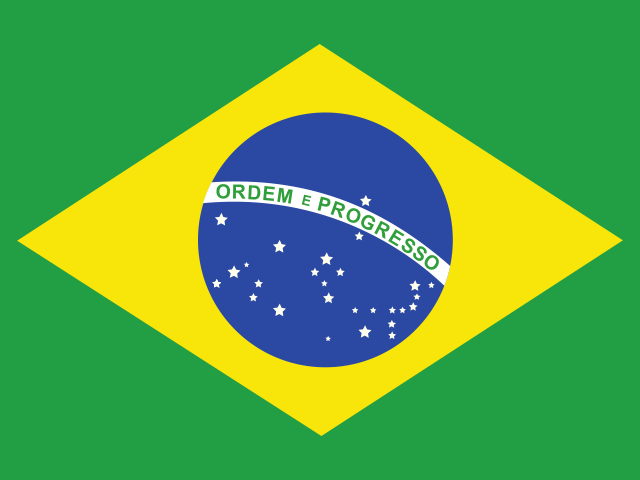
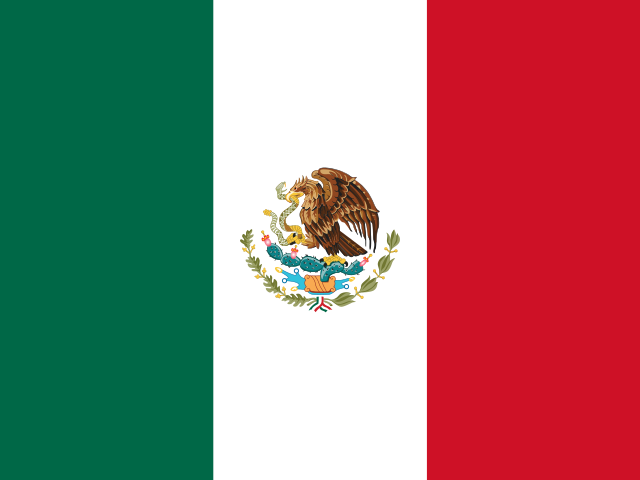
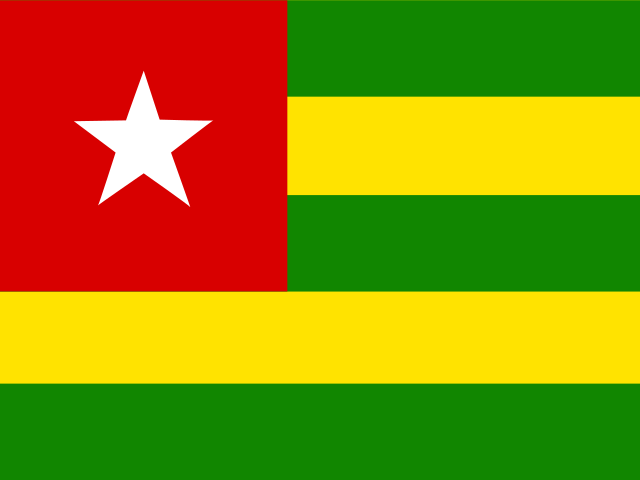
Then the individual ones. Brazil is 7:10, Mexico 4:7, and Togo is built on the golden ratio, 1:1.618. The Nordic crosses each have their own: Denmark 28:37, Norway 8:11, Sweden 5:8, Finland 11:18, Iceland 18:25. The ratio is usually fixed in the same law that fixes the colours, which is why it is a real fact about a flag and not a printer's choice.
Ohio's swallowtail
Among the fifty US state flags one is not a rectangle: Ohio's is a swallow-tailed burgee, 8:13, with a blue triangle at the hoist bearing seventeen white stars — Ohio was the seventeenth state — and a white disc with a red centre, which reads as the letter O and as a buckeye, the state's nut. Red and white stripes run out into the two tails. It was designed by John Eisenmann and adopted in 1902. On the US states map its card shows the notch, filled with the card's own colour.
What the game does with them
The flags of the globe, of the four continent maps and of the reference list all come from one vector set drawn in a 4:3 frame, and the cards are 4:3 to match. That means the square Swiss flag appears as a 4:3 rectangle with the cross in the middle, Qatar's flag is shortened to the same frame, and every 2:3 and 1:2 flag is redrawn to fit. Nepal is the one exception the set makes: the pennant keeps its shape, and the card's colour shows to its right. On the globe itself a flag is scaled to cover the country's outline and cropped to it, never stretched, so what you see on a country is mostly the middle of its flag.
The country maps work the other way round, because state and provincial flags come in every proportion and many are seals that distort badly. There each flag keeps its true shape inside a fixed card, with margins in the card colour where it does not fill it. On the Australia map the card is 2:1 and the state ensigns fill it exactly. On the Canada map the card is 16:9, the shape of Nunavut's flag; Ontario's 1:2 leaves thin bands above and below, and Quebec's 2:3 leaves them at the sides. On the US states map Rhode Island's nearly square 29:33 stands in the middle of its card with margins either side, New York's 1:2 gets bands top and bottom, and Ohio's notch shows through. The Switzerland and Sweden maps have square cards, because the cantonal flags and the Swedish counties' banners of arms are square. Once a flag lands on its region, the map crops it to the outline rather than stretching it, the same as on the globe.
Try it
Nepal, Switzerland, the Vatican and Qatar all come up in All flags and in many Thirty flags rounds; the square cantons are on the Switzerland map, and Ohio is on the US states map. Related: Flags that look alike and Flag symbols.