Nordic cross flags
Seven flags in the deck carry the same off-centre cross. The colours settle which is which, once you know what each one was built from.
One cross, shifted to the hoist
A Nordic cross is a plain cross whose vertical arm sits closer to the hoist, the edge next to the flagpole, than to the fly. Every flag in this family is that cross on a plain field, sometimes with a second, thinner cross laid over it as a border. The cross itself is the Christian cross: the design began as a crusading banner, and every later flag in the group copied the shape from the Danish one rather than inventing it afresh.
Why the shift? The usual explanation is practical. A flag on a pole is seen flapping, with the fly end folding back on itself and fraying first, so a cross set at the geometric centre looks pushed towards the fly; moved towards the hoist, it reads as centred in the wind. The long, swallow-tailed versions Denmark and its neighbours use at sea also need the crossing well inside the rectangular part of the cloth. Whatever the original reason, the shifted cross is now the family's signature, and it is the first thing to look for on a card: a cross in the middle of the flag, as on Switzerland's or Georgia's, belongs to a different family altogether.
Denmark: the original
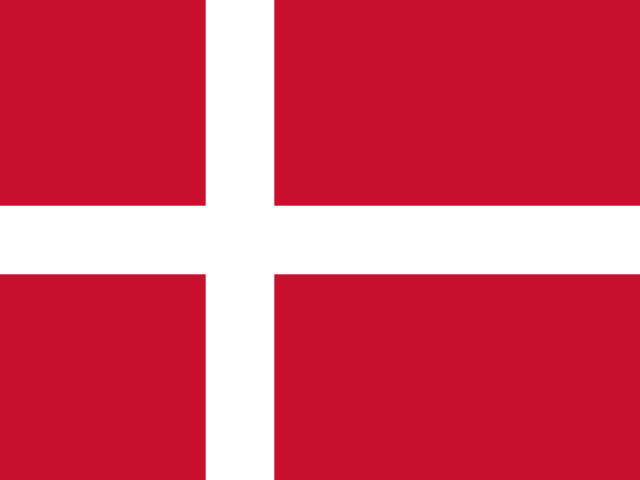
The Dannebrog, a white cross on red, is generally counted as the oldest national flag still in use. The famous story attaches it to 15 June 1219: during King Valdemar II's battle against the Estonians at Lyndanisse, on the site of today's Tallinn, the flag fell from the sky and turned the fight. That is a legend, first written down in the early sixteenth century, some three hundred years after the battle. The earliest firm evidence is more modest: a white-cross-on-red banner drawn beside the arms of the Danish king in the Gelre Armorial, a heraldic manuscript from the Low Countries of the late fourteenth century. Denmark keeps the legend's date all the same; 15 June is Valdemarsdag, one of its flag days.
On the card it is the simplest of the seven: two colours, no border on the cross, and a red field that only Norway shares.
Sweden: the heraldic colours
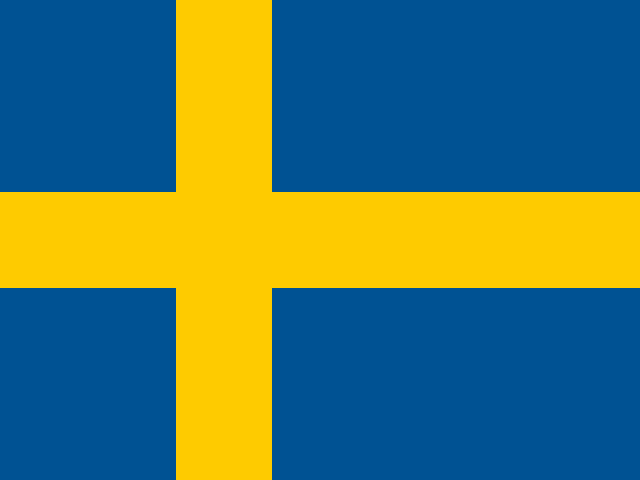
Sweden took the Danish layout and its own colours: a yellow cross on blue, most likely from the royal arms, three gold crowns on a blue shield. The blue-and-yellow cross flag is documented from the sixteenth century, and its present form was fixed by law in 1906. It is the other two-colour flag in the family, and the easy one: nothing else in the deck is blue with a yellow cross except Åland, which adds a red one.
Norway: Denmark plus a blue cross
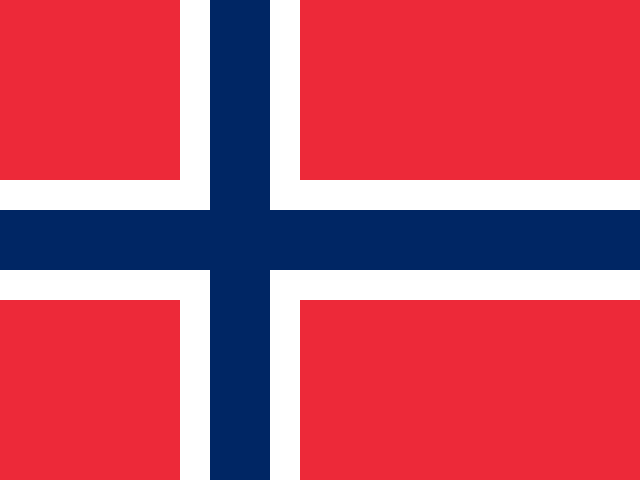
Norway spent some four centuries under the Danish crown and flew the Dannebrog. When that union ended in 1814 and a new one with Sweden began, the country needed a flag of its own; the design adopted in 1821 came from Fredrik Meltzer, a member of the Storting. He kept the Danish flag and laid a blue cross inside the white one. Red, white and blue were the colours of liberty in that decade, the colours of the French and American flags, and blue was also the colour of Sweden's cross. From 1844 both Norway and Sweden carried a small union badge in the upper hoist corner, nicknamed the herring salad for its jumble of colours; Norway dropped it from its flag a few years before the union dissolved in 1905.
The way to remember it is the way it was built: Norway is the Danish flag with a blue cross drawn inside the white.
Iceland: Norway's colours swapped
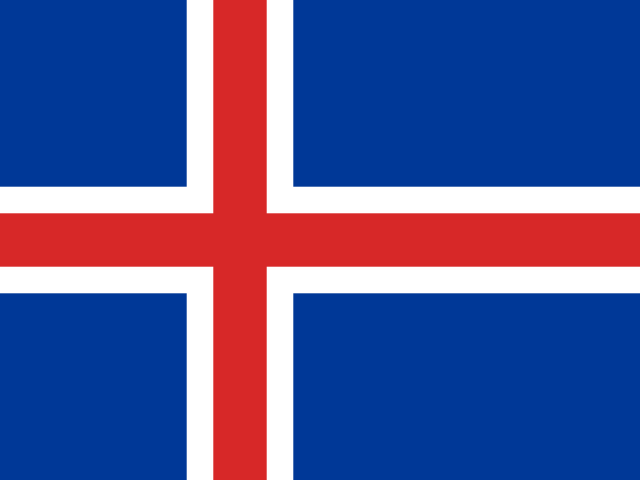
Iceland's flag is Norway's with field and cross exchanged: a blue field, a red cross, a white border. It was first sanctioned in 1915, became the flag of the Kingdom of Iceland at sovereignty in 1918 and of the republic in 1944. The colours are usually read as the red of volcanic fire, the white of ice and snow, and the blue of the mountains and the sea. That is also the mnemonic. Iceland is an island, so its field is the blue of the sea around it, with the fire inside; Norway's field is the red of the Danish flag it grew out of.
Finland: lakes and snow
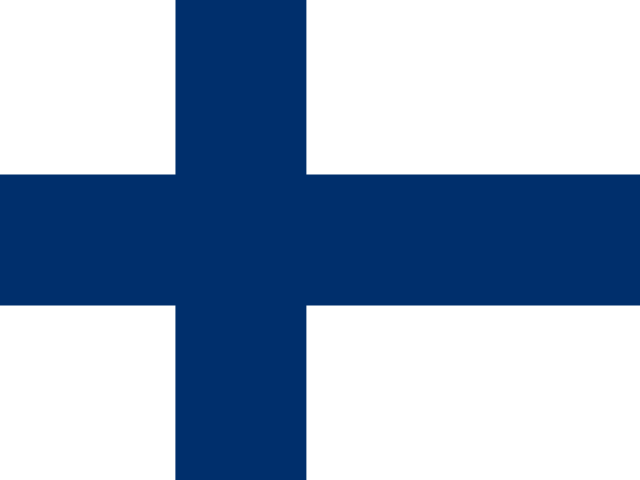
Finland's Siniristilippu, the blue cross flag, was adopted in 1918, months after independence from Russia. Blue for the country's lakes and white for its snow is the standard reading of the colours, and the poet Zachris Topelius had argued for that pair in the 1860s, long before there was a state to fly it. The cross is plain blue on white with no border, which makes Finland the quietest card in the group and one of the easiest: the only other white field in the family is the Faroese one, and its cross is red.
The Faroe Islands and Aland: two dependencies
Both are in the deck, and both are small enough on the globe to be worth zooming in on.
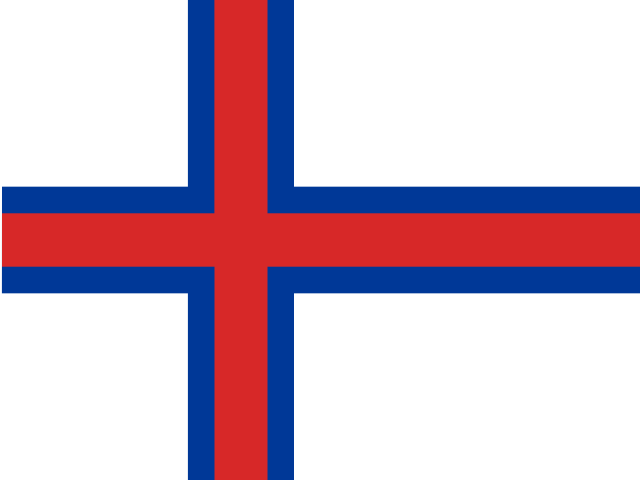
The Faroese flag, Merkið, is a red cross edged in blue on a white field. Faroese students in Copenhagen designed it in 1919, and it was first raised on the islands that summer. Its official life began in wartime: after Germany occupied Denmark in 1940, Britain occupied the Faroes and on 25 April 1940 approved the flag for Faroese ships, since the Dannebrog now flew over an enemy-held country. The Faroes still keep 25 April as Flag Day, and Denmark recognised the flag in the Home Rule Act of 1948.
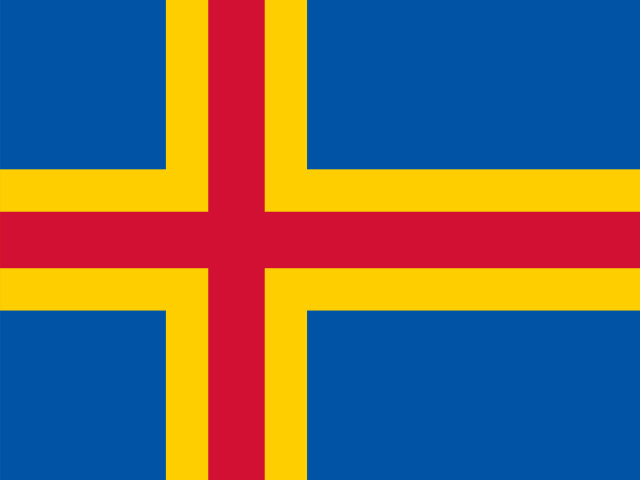
Åland, the Swedish-speaking autonomous province of Finland at the mouth of the Gulf of Bothnia, adopted its flag in 1954: the Swedish flag with a red cross laid inside the yellow one, Sweden's colours for the language and culture, red from the Finnish arms for the state. On the globe it sits between Sweden and Finland, and the card looks like Sweden's until you notice the red.
Three flags, one set of colours
Norway, Iceland and the Faroes use the same three colours, and each takes a different one as its field: red for Norway, blue for Iceland, white for the Faroes. Fix the field first. Then the cross: Norway's is blue with a white edge, Iceland's red with a white edge, the Faroese red with a blue edge. A blue cross can only be Norway; a red cross on a blue field can only be Iceland; a red cross on white with a blue edge is the Faroes.
The Nordic flag without a cross
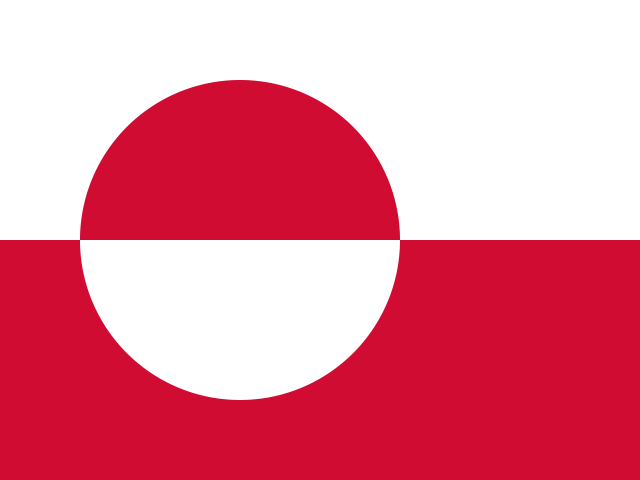
Greenland is the one Nordic country or territory whose flag has no cross at all. Erfalasorput, adopted in 1985 to a design by Thue Christiansen, is a white field over a red one with a disc counterchanged across the dividing line: the sun rising over the ice, in the two colours of the Dannebrog. Like the cross of its neighbours, the disc is set towards the hoist.
Try it
All five Nordic states are on the Europe map, where the family comes up together in one round. On the globe, Thirty flags mixes them with the rest of the world, and All flags deals all seven, the Faroes and Åland included. Learning lets you click each one and compare the cards before you play. The other mirror-image pairs of the deck are in Flags that look alike; for the other great family of European flags, see Tricolours.