Pan-Arab colours: black, white, green and red
A dozen Arab flags are built from the same four colours. The first was raised against the Ottomans in 1916; the second family was born in Cairo in 1952.
The flag of 1916
In June 1916 Sharif Hussein of Mecca rose against Ottoman rule, and the Arab Revolt flew a flag of its own: three horizontal bands — black, green and white from the top — and a red triangle at the hoist. That flag belongs to no country today, so it cannot appear on this page, but nearly every flag below descends from it.
The traditional explanation of the four colours gives each to a dynasty: black for the Abbasids of Baghdad, white for the Umayyads of Damascus, green for the Fatimids of Cairo, red for the Hashemites, the sharif's own house, who led the revolt. A medieval verse by the Iraqi poet Safi al-Din al-Hilli, which pairs white with deeds, black with battles, green with fields and red with swords, is usually cited alongside it. Treat both as the story the flags tell about themselves rather than as a record of what anyone flew in the eighth century.
The triangle family
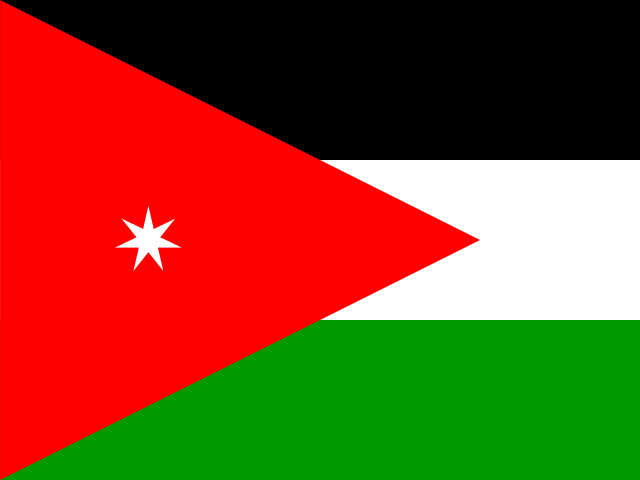
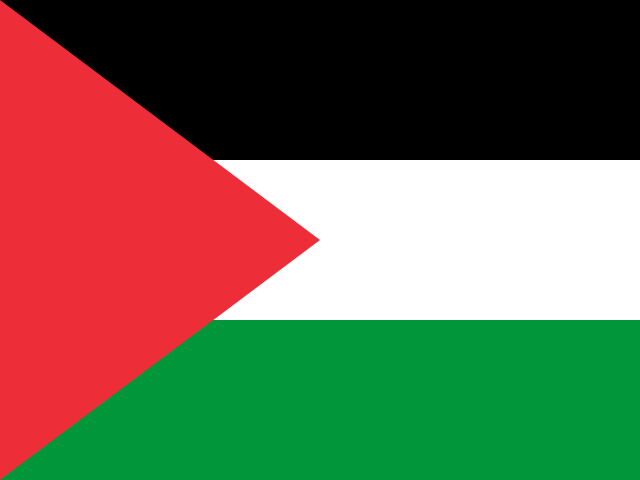
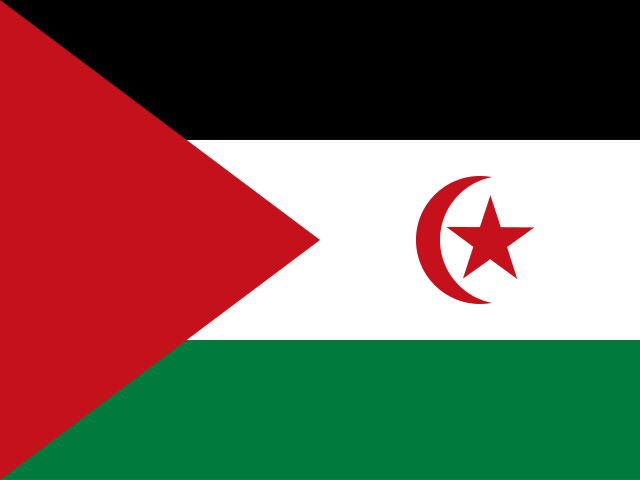
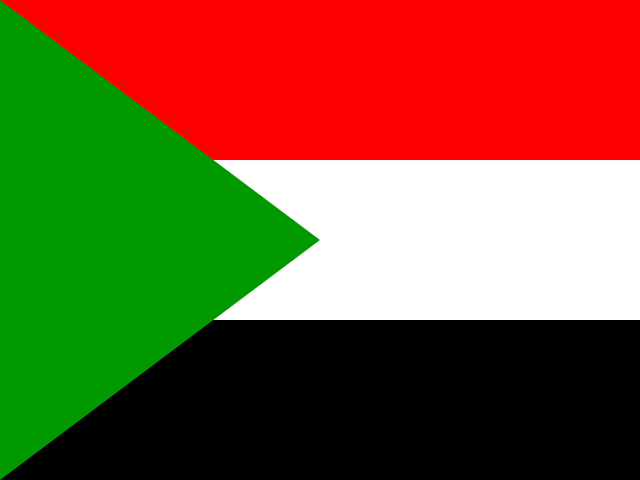
Jordan's flag is the revolt flag with the two lower bands swapped — black, white, green — and a white seven-pointed star on the red triangle. It was adopted in 1928 for the Emirate of Transjordan, which the Hashemites ruled under British mandate; the official reading of the seven points is the seven verses of Al-Fatiha, the opening chapter of the Quran. Take the star away and you have the flag of Palestine: the same black, white and green, the same red triangle, nothing else. The flag the game shows on Western Sahara, that of the Sahrawi Arab Democratic Republic, is the Palestinian pattern with a red crescent and star added to the white band. Sudan (1970) keeps the triangle but paints it green, and runs the bands red, white, black — the colours of the other family, which is where this guide goes next.
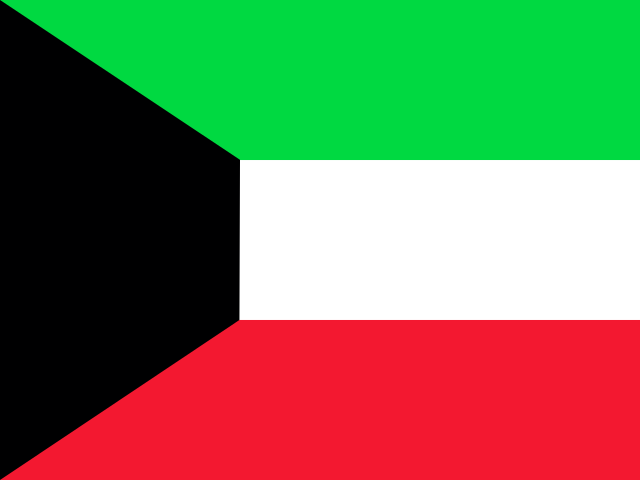
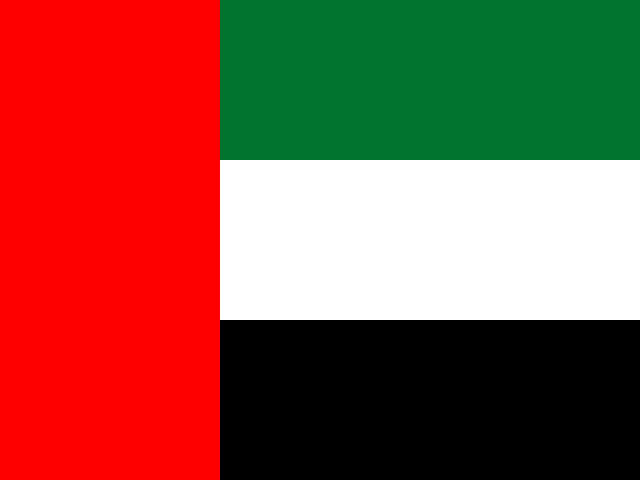
Kuwait and the United Arab Emirates rearranged the pieces. Kuwait's flag (1961) is green, white and red in horizontal bands with a black trapezoid at the hoist — the triangle with its point cut off. The UAE (1971) straightens it into a vertical red bar with green, white and black beside it. Both have all four colours; neither has a triangle, a star or an emblem, so the shape of the dark block at the hoist is what you look for.
The Arab Liberation tricolour
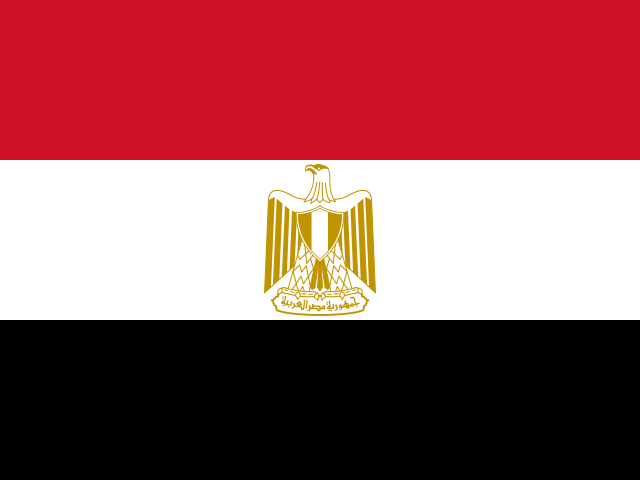
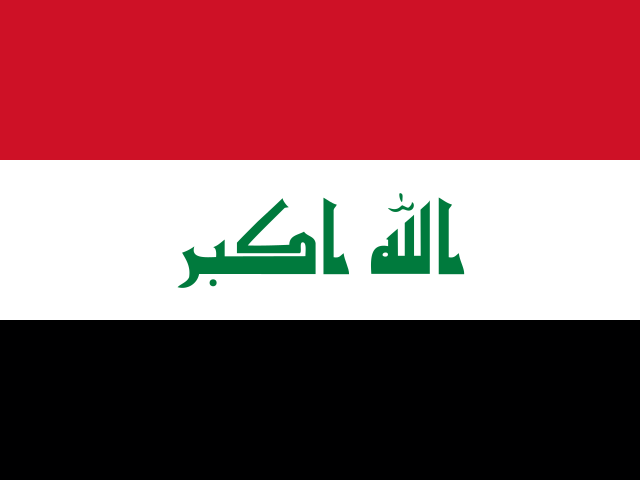
The second family began in Egypt. After the Free Officers' revolution of 1952 their movement flew a red, white and black tricolour — the Arab Liberation Flag — and it became Egypt's national flag in 1958, when Egypt and Syria formed the United Arab Republic and put two green stars on the white band, one for each country. The union lasted three years; the tricolour outlived it. Over the following decades red, white and black spread to the states that declared themselves republics in the Egyptian mould: Iraq in 1963, the Yemen Arab Republic in 1962 and united Yemen from 1990, Syria in several versions, Libya for a few years after 1969, Sudan with its triangle. The usual reading is red for the struggle, white for a bright future and black for the dark past left behind — a modern reading, not a dynastic one.
Today four countries fly it, and the white band is the thing to read.
- Egypt — the golden Eagle of Saladin in the centre, since 1984. From 1972 to 1984 the emblem was the Hawk of Quraish, for a planned federation with Syria and Libya.
- Iraq — the takbir, the Arabic phrase meaning God is greatest, in green Kufic script, and nothing else. The three green stars of 1963 stood for a union with Egypt and Syria that never happened; the script was added in 1991, redrawn in Kufic in 2004, and the stars were removed in 2008.
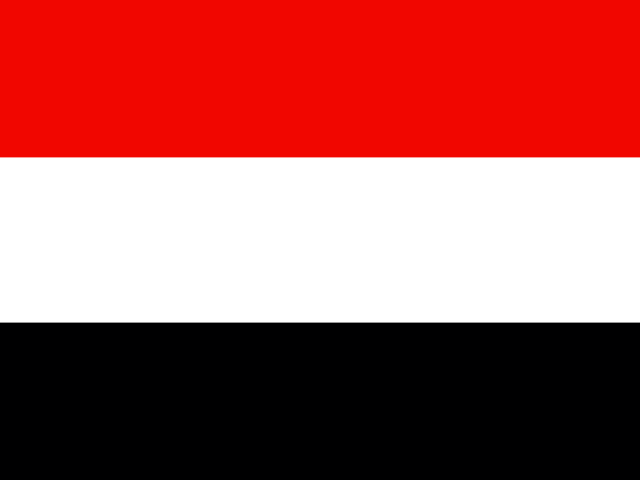
- Yemen — plain. No stars, no script, no emblem: three bands and nothing more.
- Syria — two green stars, or a different flag altogether; see below.
Syria, twice
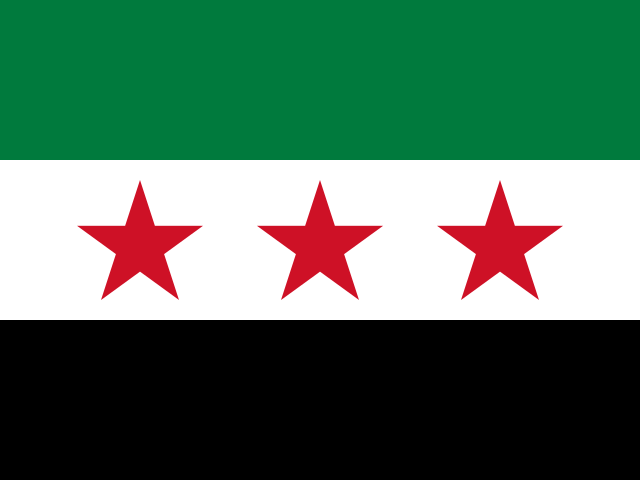
From 1980 until the end of 2024 Syria's flag was the tricolour of the United Arab Republic: red, white and black with two green stars in the white band — the stars that had once stood for Egypt and Syria. After the change of government in December 2024 the country returned to the flag of its independence era, used from 1932 until 1958 and again for two years after Syria left the union: green, white and black bands with three red five-pointed stars on the white. Both versions are still in circulation in atlases and flag sets. The game draws its flags from the flag-icons set and shows whichever version that set carries, so read the card either way: red, white and black with two green stars is Syria, and green, white and black with three red stars is also Syria. Nothing else in the deck looks like either.
Not pan-Arab, despite the colours
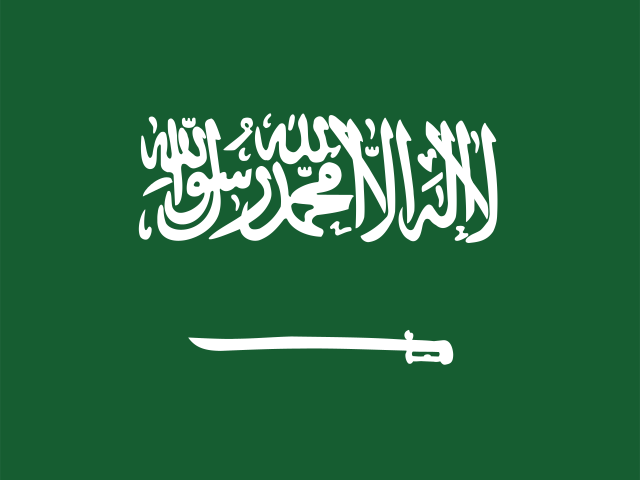
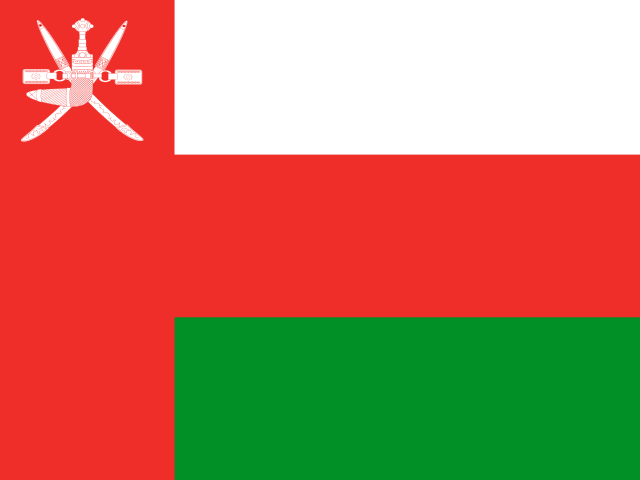
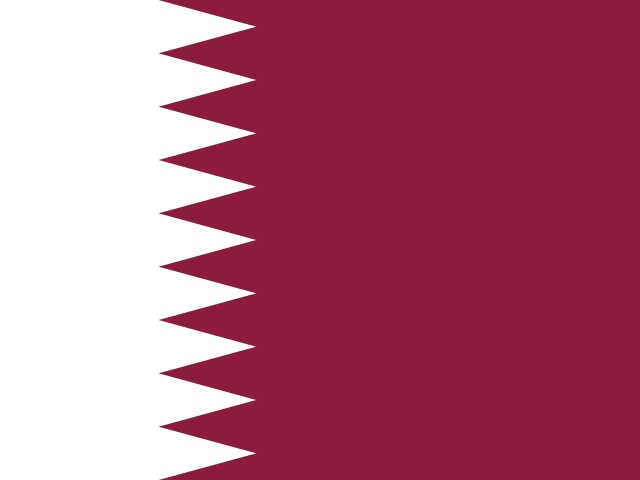
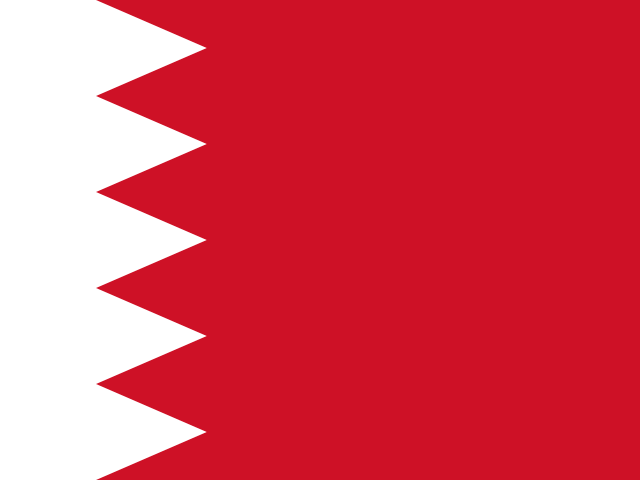
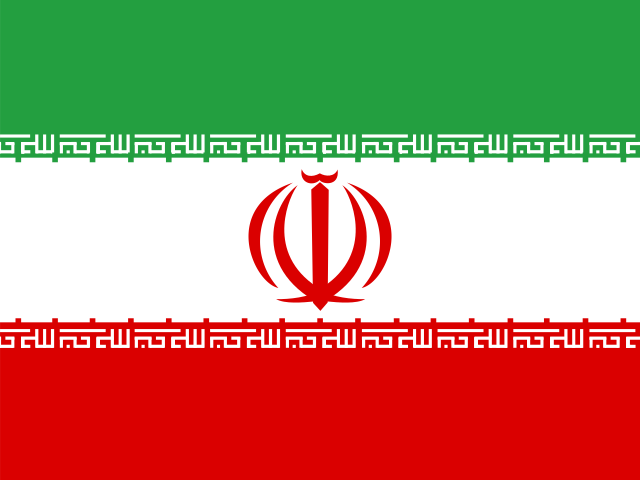
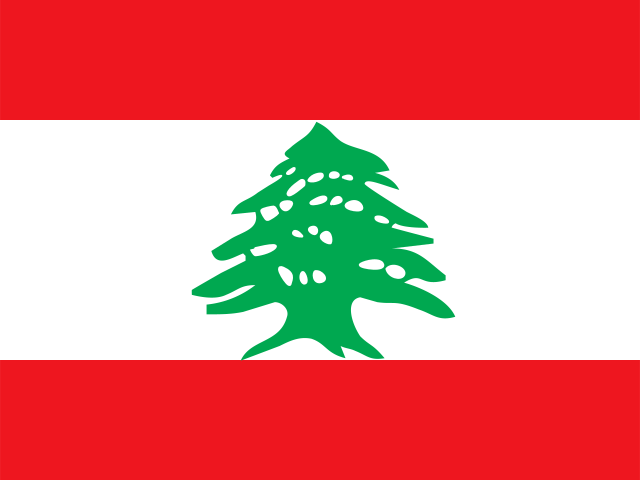
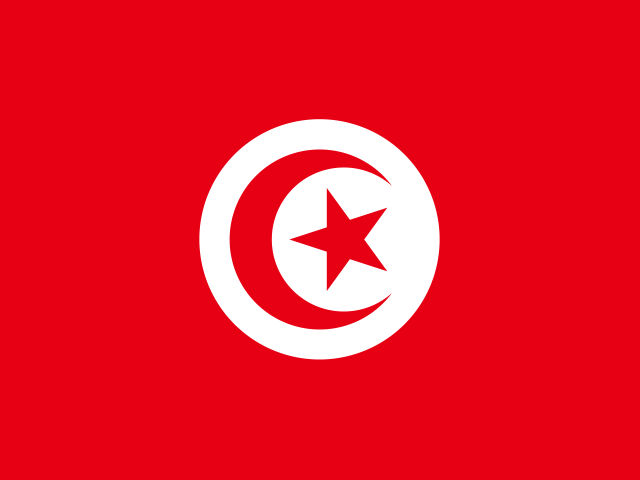
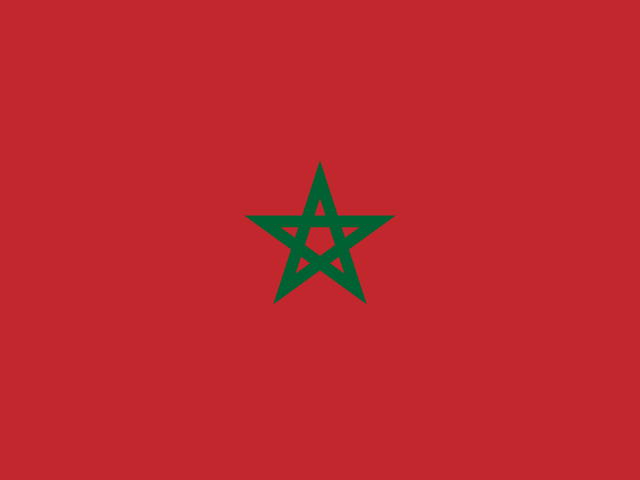
Several Arab flags stay outside the family, and a few non-Arab flags wander into the colours. Saudi Arabia is green with the shahada and a sword. Oman is white, red and green with a red bar at the hoist carrying a khanjar and crossed swords — three of the four colours, but from its own heraldry. Qatar and Bahrain are serrated flags: Bahrain's is red with five white points, Qatar's maroon with nine. Lebanon has its cedar; Tunisia is red with a crescent and star in a white disc, Morocco red with a green star, Algeria green and white with a red crescent and star. Iran's green, white and red bands, with the emblem in the centre and the takbir repeated in small script along the borders of the white band, are Iran's own colours, and Iran is not an Arab state. Libya's red, black and green with the crescent comes from the Senussi banner of the 1951 kingdom, not from either family — see the pan-African guide, where it is a false friend too.
Try it
The Asia map puts Jordan, Palestine, Kuwait, the Emirates, Iraq, Syria and Yemen on one screen, with Saudi Arabia, Oman, Qatar and Bahrain around them; Egypt, Sudan, Libya and Western Sahara are on the Africa map. Learning shows any flag on a click, and Thirty flags is where the trapezoid and the seven-pointed star start to matter. Related: Flags that look alike and Flag symbols.