Pan-Slavic colours: red, white and blue in Eastern Europe
Six Slavic flags share three colours that started on Dutch ships, were adopted in Prague in 1848 and needed coats of arms to stay distinguishable after 1991.
From Amsterdam to St Petersburg
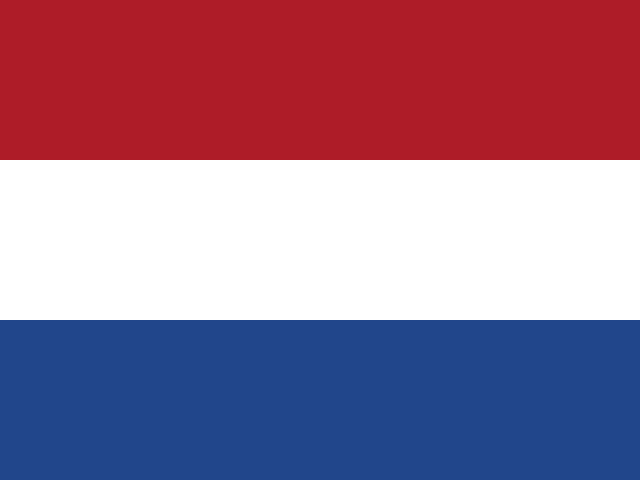
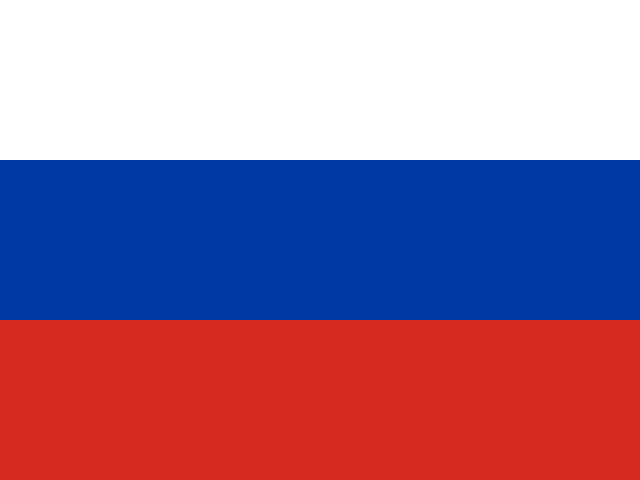
The Russian tricolour is a horizontal white, blue and red. It appeared at the end of the seventeenth century as a flag for Russian ships under Peter the Great, who had spent 1697 and 1698 in the Netherlands learning shipbuilding, and tradition has always traced it to the Dutch red, white and blue reshuffled. It became the official national flag of the empire only at the end of the nineteenth century, gave way to the red flag after 1917, and was restored on 22 August 1991, a date Russia still keeps as Flag Day.
Prague, 1848
In the year of revolutions the Slavs of the Austrian Empire, Czechs, Slovaks, Poles, Croats, Serbs and Slovenes among them, met in Prague in June 1848 for a Slavic Congress chaired by the Czech historian František Palacký. Russia was the one independent Slavic power, and the congress took its colours as the colours of all Slavs: red, blue and white, known since as the pan-Slavic colours. The congress itself was broken up within weeks by fighting in Prague, but the colours stayed. It did the choice no harm that the same three were the colours of the French tricolour, the flag of the revolutions themselves.
The family
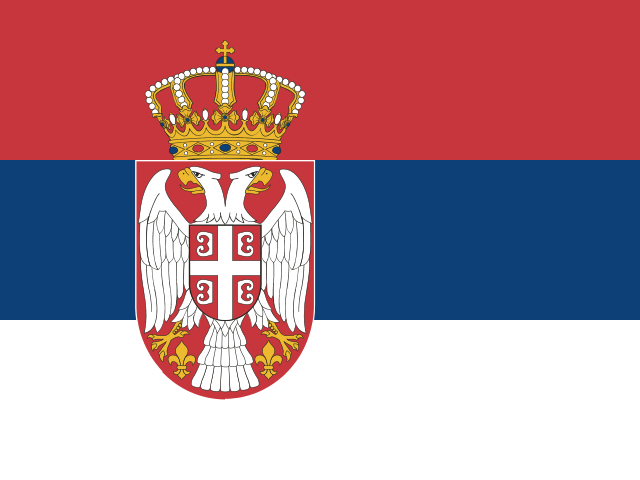
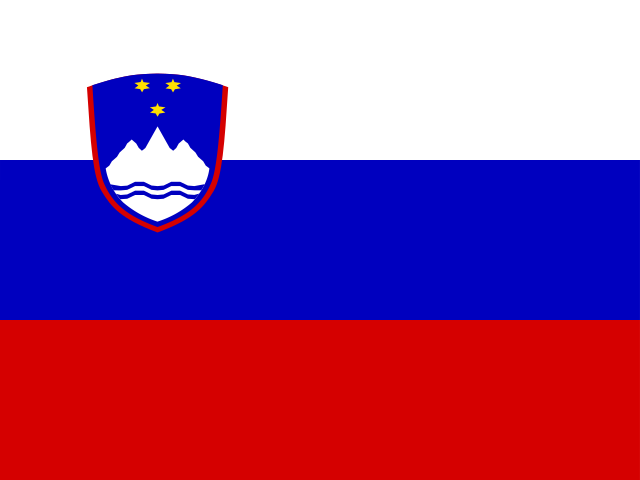
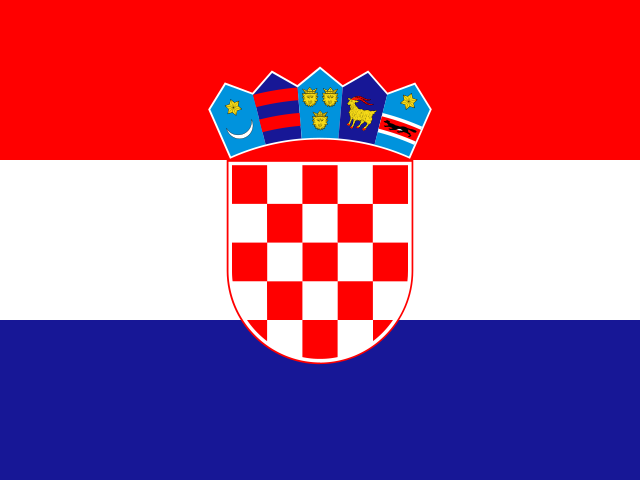
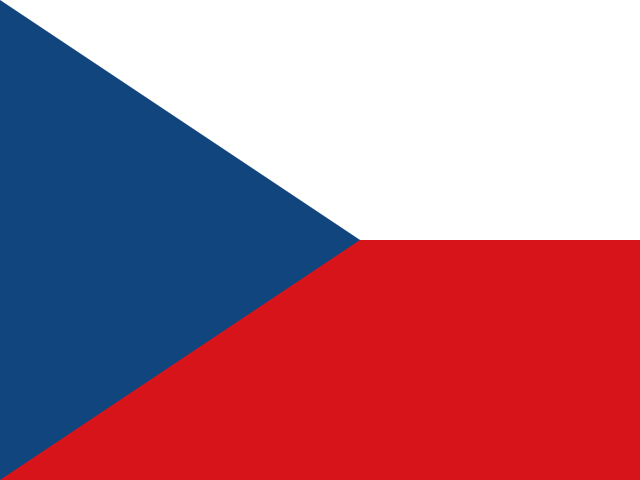
Serbia flies red, blue and white, the Russian order reversed, a tricolour first adopted in the 1830s; the state flag adds the lesser arms, a white double-headed eagle under a crown, set towards the hoist. Slovakia's white, blue and red dates from 1848. Slovenia's is the same three, first raised in Ljubljana in 1848; Slovenes trace them to the arms of the old Duchy of Carniola, though the choice was a pan-Slavic one as well. Croatia flies red, white and blue, the Dutch order, from the same year, with the red-and-white chequerboard of the Croatian arms in the centre, topped since 1990 by a crown of five small shields for the historical regions. Czechia uses the colours differently: white over red, the colours of Bohemia's silver lion on a red shield, with a blue wedge at the hoist.
The wedge has a story of its own. White over red on its own is the flag of Poland, so in 1920 Czechoslovakia added the blue triangle; accounts differ on whether the blue was meant for Slovakia, for Moravia, whose arms are also blue, or simply to complete the Slavic set. When the federation split at the start of 1993, the law on its dissolution said that neither successor would use its symbols. The Czech Republic kept the flag anyway.
Bulgaria's green
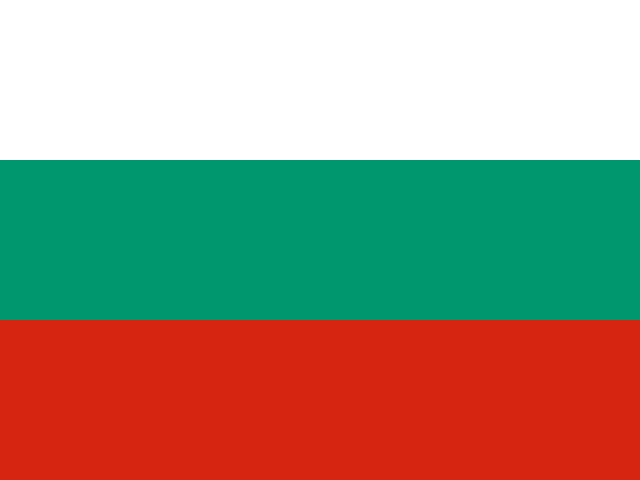
Bulgaria took the Russian flag as its model after Russia's war against the Ottomans in 1877 and 1878 set the country free, and wrote it into the Tarnovo Constitution of 1879 with one change: green in the middle in place of blue, usually explained as the green of the country's fields and forests. White, green and red is easy to mistake for Hungary's red, white and green; check the order. White on top is Bulgaria.
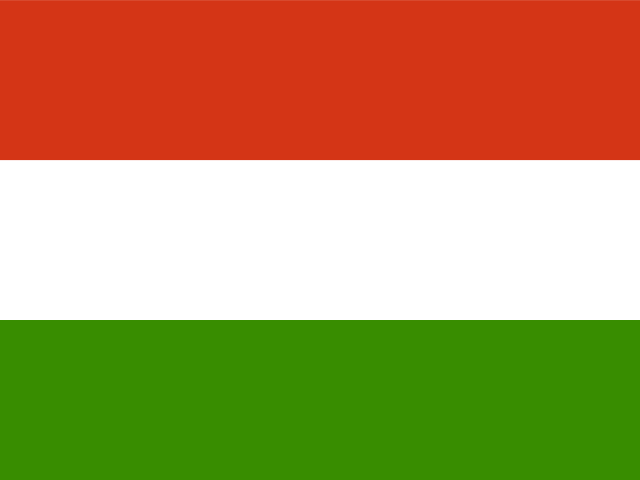
Three flags, one tricolour
The break-up of Yugoslavia and Czechoslovakia between 1991 and 1993 produced a problem the congress of 1848 had not foreseen. Slovenia's plain tricolour, Slovakia's plain tricolour and the restored Russian one are identical. Coats of arms did the sorting.
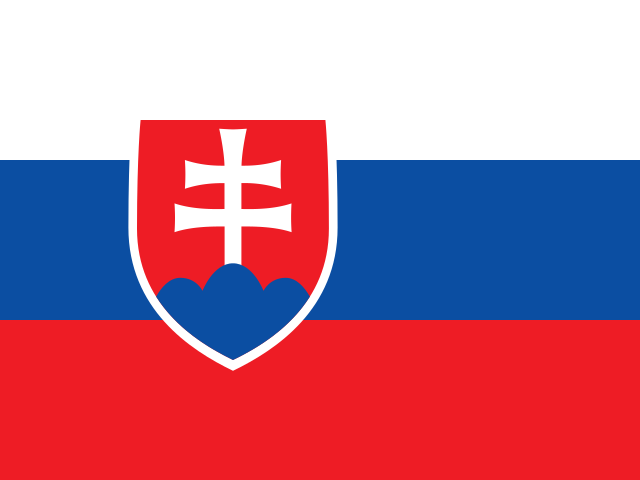
Slovenia adopted its flag on 25 June 1991, the day it declared independence: the red star of the Yugoslav republic came off, and the new arms went into the upper hoist corner, straddling the white and blue stripes. They show the three white peaks of Triglav, the country's highest mountain, two wavy blue lines for the rivers and the sea, and three six-pointed gold stars from the arms of the medieval Counts of Celje. Slovakia had flown the plain tricolour since 1990 and added its arms on 3 September 1992, together with its constitution and expressly so that the flag would no longer be mistaken for Russia's: a red shield with a white double cross rising from the middle of three blue hills, set towards the hoist and touching all three stripes. Russia's flag stayed plain.
So: plain is Russia; a small shield in the corner, over the top two stripes, is Slovenia; a larger shield in the left half, reaching all three stripes, is Slovakia. Serbia's eagle sits on the same side, but its flag starts with red. Croatia's chequerboard is in the centre, and its flag starts with red too.
Croatia and the Netherlands
Take the arms off Croatia's flag and what is left is the Dutch flag in colour and in order. Paraguay's red, white and blue has the same layout too, with its own emblem in the centre. On the card the chequerboard settles Croatia at once; the plain red, white and blue and its own twin, Luxembourg, are in Tricolours.
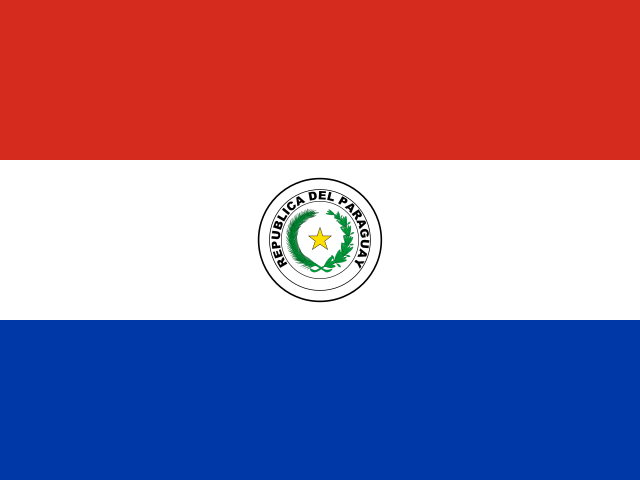
Slavs who stayed out
Six Slavic countries do not use the colours, and each has a reason.
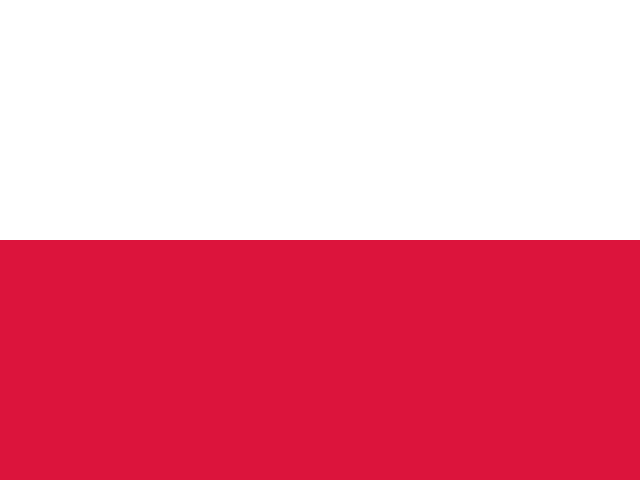
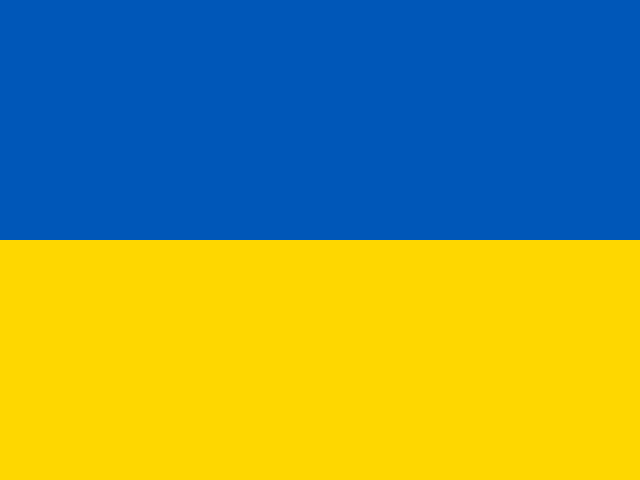
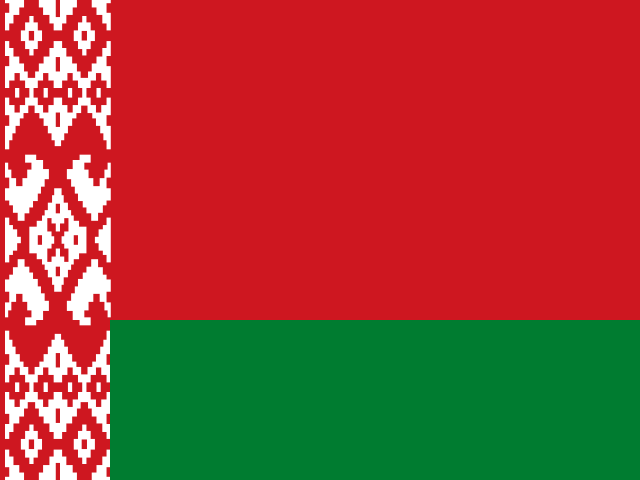
Poland's white and red are the colours of its arms, the white eagle on red, adopted as the national colours by the Sejm in 1831 during the uprising against Russia; a pan-Slavism led from St Petersburg held little appeal in a country Russia had helped to partition. Ukraine's blue and yellow also date from 1848, the year the Supreme Ruthenian Council in Lviv took them from the arms of the old principality of Galicia, a golden lion on blue; they were restored in 1992, and the popular reading is a blue sky over a field of wheat. Belarus flies a red-over-green flag derived from its Soviet-era flag of 1951, readopted after a referendum in 1995 with the hammer and sickle removed and a traditional woven pattern in red and white along the hoist; the white-red-white tricolour of 1918 and of 1991 to 1995 is now the flag of the opposition.
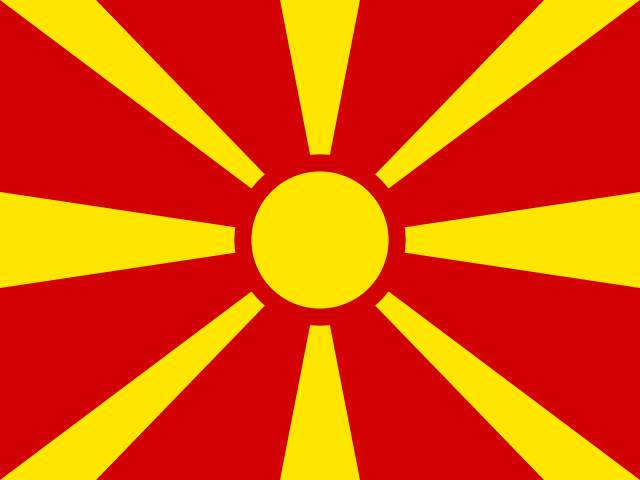
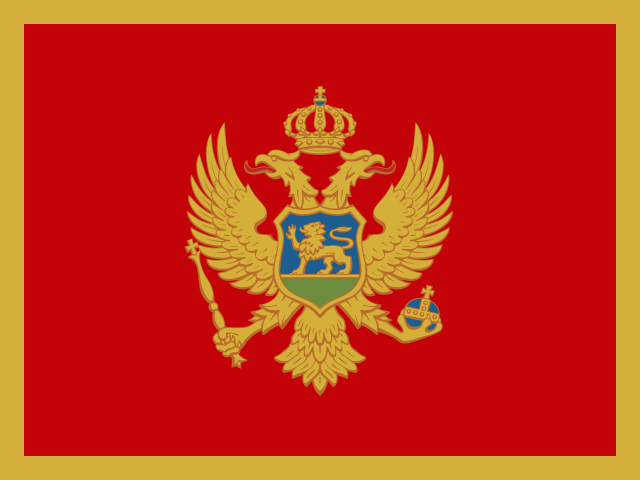
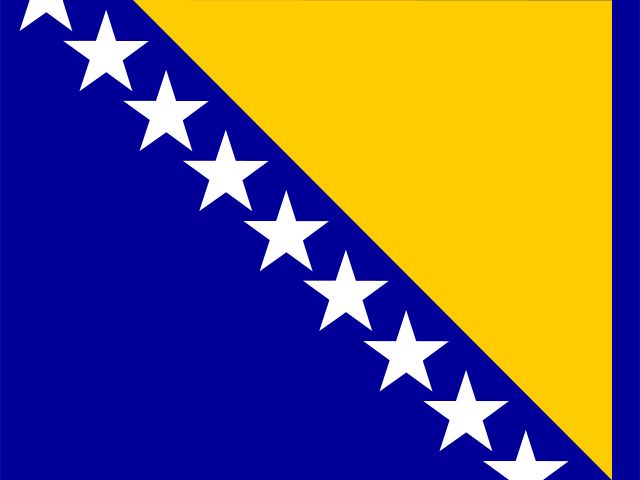
North Macedonia's red and gold are the colours of the historical Macedonian arms; the present flag, a sun with eight widening rays, dates from 1995, when the sixteen-rayed Vergina Sun of the 1992 flag was given up under pressure from Greece. Montenegro flew a pan-Slavic tricolour of red, pale blue and white while it was still in a federation with Serbia, and in 2004 replaced it with a red banner edged in gold, with the double-headed eagle of its old monarchy in the centre. Bosnia and Herzegovina's blue field, yellow triangle and row of white stars was imposed in 1998 by the international High Representative after the country's parliament could not agree on a design; the colours were chosen because they belong to none of the three constituent peoples, and the triangle is read as those three peoples, or as the shape of the country.
Try it
All of these are on the Europe map, where the Balkan tricolours land next to each other and the arms are the only thing to go on. On the globe, Learning shows each flag full size with the country's facts, and Practice keeps dealing the ones you have not placed yourself. For the Dutch and French originals see Tricolours; for more pairs separated by an emblem, Flags that look alike.